Need it handled? Call (757) 537-4043
Signs You Need Interior Paint Refresh in Norfolk, VA: Caspian Painting serves Norfolk and the surrounding area. Call (757) 537-4043 for a free estimate.
TL;DR: Norfolk's coastal humidity (74–80% year-round) accelerates interior paint failure far faster than inland Virginia. Watch for peeling, bubbling, yellowing, musty odors, and tacky surfaces - especially in bathrooms and kitchens. A typical 1,500 sq ft home refresh runs $4,500–$5,500 locally. Lead paint risk applies to homes built before 1978.
In This Article
- Why Norfolk Homes Need Paint Refreshes More Often Than Average
- What Are the Most Obvious Visual Signs Your Paint Needs Refreshing?
- Are There Non-Visual Signs You Need New Interior Paint?
- Room-by-Room Refresh Timeline for Norfolk Homes
- How Much Does an Interior Paint Refresh Cost in Norfolk, VA?
- How to Choose the Right Paint for Norfolk's Humid Climate
- Recommended Interior Painting: Caspian Painting
- Frequently Asked Questions About Interior Paint Refresh in Norfolk
- Ready to Refresh Your Norfolk Home's Interior?
Why Norfolk Homes Need Paint Refreshes More Often Than Average
Here in Norfolk, we're fighting a climate that most interior paint simply wasn't designed for. Our coastal humidity averages 74–76% year-round, with summer mornings regularly hitting 80% or higher. Compare that to the EPA's recommended indoor humidity range of 30–50%, and you're looking at moisture levels that are 50% higher than what's ideal for paint adhesion.
That gap matters. A lot.
When humidity stays elevated, water vapor penetrates drywall and paint film, breaking the bond between the paint and substrate. Salt-laden air from the Atlantic compounds the problem - hygroscopic salt crystals deposited on walls and near windows draw even more moisture into paint layers, accelerating delamination. The result: Norfolk homes see interior paint failure significantly faster than homes in drier inland Virginia cities like Roanoke or Blacksburg.
This isn't a cosmetic issue. It's a durability problem baked into our geography. Understanding the signs early means catching problems before they spread to drywall and framing.
What Are the Most Obvious Visual Signs Your Paint Needs Refreshing?
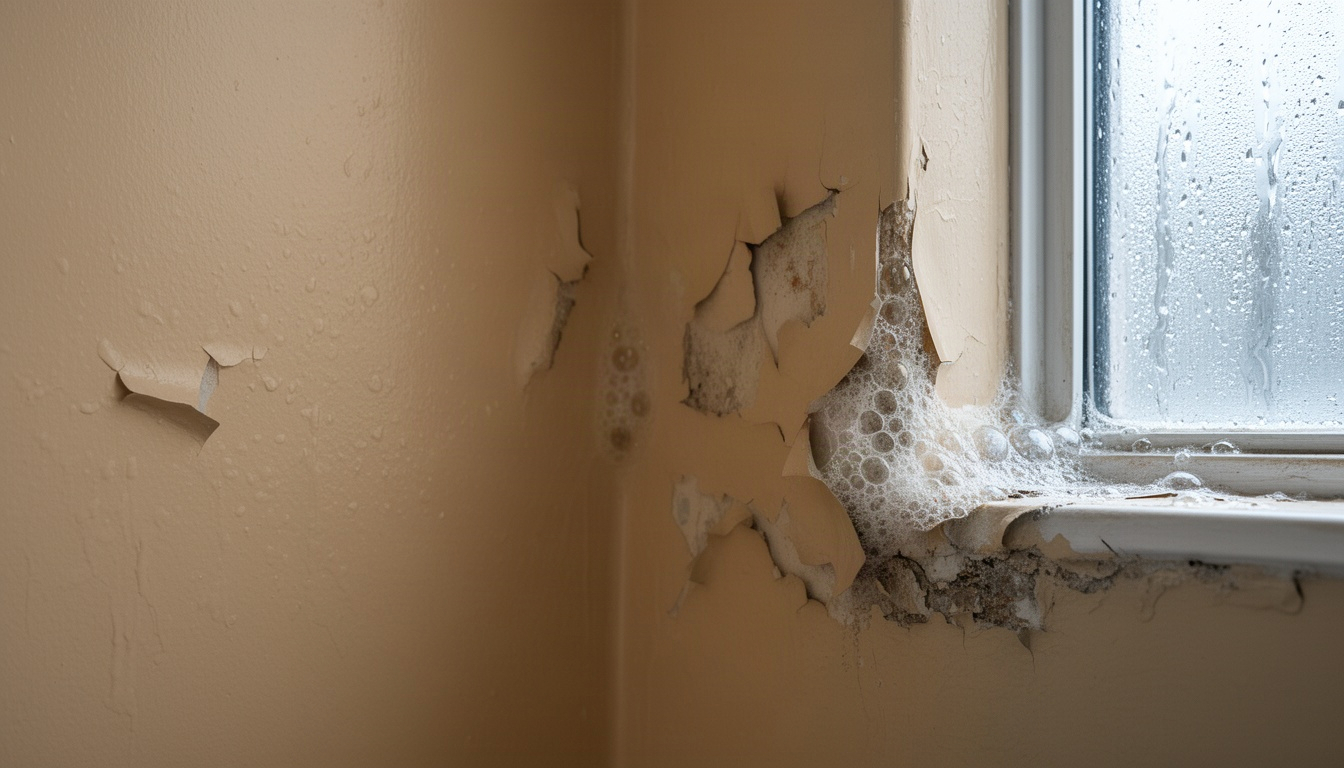
Peeling, bubbling, and flaking paint are the dominant failure modes in our area. Moisture-driven adhesion loss shows up as paint lifting away from walls in sheets or blisters, especially on exterior-facing walls and around windows where salt air penetrates. If you see this, the substrate has already absorbed significant moisture - repainting without addressing the moisture source will fail again within 12–24 months.
Yellowing or fading appears first in sun-facing rooms. Older alkyd and oil-based paints (common in Norfolk homes built before 1990) are especially prone to yellowing when combined with high humidity, as oxidation accelerates in moist air. Latex paints fade more gradually, but the effect is visible - a bedroom painted five years ago looks noticeably duller than the color chip you chose.
Visible stains that cleaning won't remove signal either mold growth or water infiltration. Brown or gray stains, particularly in corners and along the ceiling line, indicate moisture has been present long enough to discolor the paint film. These stains often return after cleaning if the underlying moisture problem isn't solved.
Chalking - a powdery, dusty residue on the paint surface - means the binder has degraded from UV exposure and humidity cycling. Run your hand across the wall; if your palm comes away with white or colored powder, the paint is near end-of-life.
Hairline cracks along drywall seams result from seasonal humidity swings. Norfolk's humidity fluctuates between 80%+ in summer and 50–55% in winter, causing drywall and framing to expand and contract. Over time, this movement fractures paint at seams and corners.
Quick visual checklist:
- Peeling or bubbling in any room
- Yellowing in sun-exposed areas
- Stains that don't wash away
- Chalky or powdery surface texture
- Cracks at seams or corners
- Visible mold or mildew spots
Check behind furniture and inside closets for true color comparison - these protected areas show what your paint looked like when new.
Are There Non-Visual Signs You Need New Interior Paint?
Not all paint failure shows up on the surface. Some of the most telling indicators are things you smell, feel, or experience.
Persistent musty or chemical odors often mean mold is growing behind the paint or inside wall cavities. Musty smells in bathrooms, basements, or poorly ventilated rooms are a reliable indicator of moisture problems. Older homes with oil-based paints may also emit a lingering chemical odor from VOC off-gassing - a sign the paint is breaking down and releasing volatile organic compounds into your indoor air.
Allergic reactions or increased dust can result from aging paint that's no longer holding particulates on its surface. As paint degrades, it becomes porous and stops repelling dust and allergens. If household members experience worsening allergies in specific rooms, a fresh coat of low-VOC paint often helps.
Tacky or sticky wall surfaces in high-humidity rooms like bathrooms and kitchens indicate plasticizer migration - the paint binder is breaking down under sustained moisture exposure. Walls that feel slightly sticky or resist normal cleaning are nearing failure.
Paint that no longer cleans easily has lost its washability. Healthy paint sheds dirt and grime with a damp cloth. When paint becomes porous and dull, it traps dust and stains. This functional decline is an end-of-life signal, even if the paint looks acceptable from across the room.
Lead paint risk in pre-1978 homes. Norfolk's Ghent, Colonial Place, Larchmont, and Olde Towne neighborhoods contain significant pre-1978 housing stock. If your home was built before 1978 and paint is peeling or deteriorating, federal law (EPA RRP Rule 40 CFR Part 745) requires a certified contractor to handle the work. Disturbing lead paint without proper containment is a federal violation and a serious health hazard, especially for children and pregnant women.
Room-by-Room Refresh Timeline for Norfolk Homes
Not all rooms wear paint at the same rate. Here's what we typically see in our community:
| Room | Typical Repaint Interval | Key Norfolk Risk Factor |
|---|---|---|
| Kitchen | 3–4 years | Grease, steam, and moisture from cooking |
| Bathroom | 3–4 years | Persistent humidity and mildew growth |
| Living rooms & bedrooms | 5–7 years | Normal wear under typical conditions |
| Hallways & entryways | 3–5 years | High-traffic scuffing and dirt accumulation |
| Basements | 4–6 years (if dry) | Efflorescence and tidal water table pressure |
Kitchens endure grease splatter, steam from cooking, and temperature swings. In Norfolk's humid climate, expect repainting every 3–4 years rather than the 5-year national average.
Bathrooms are the most aggressive environment. Shower steam and exhaust moisture keep humidity above 60% for hours after use. Even with a running exhaust fan, Norfolk bathrooms typically need refreshing every 3–4 years. Mold-resistant paints with mildewcide additives help extend this timeline slightly.
Living rooms and bedrooms under normal conditions last 5–7 years. These spaces see lower moisture and less traffic, so paint holds up longer. However, bedrooms on the ocean-facing side of homes near the water may experience salt-air degradation faster.
Hallways and entryways take a beating from foot traffic, door handles, and dirt. Plan for repainting every 3–5 years depending on household size and activity level.
Basements require special attention. If your basement is in a FEMA flood zone (common in neighborhoods like Larchmont, Ocean View, and Willoughby), watch for efflorescence - white powdery salt deposits on walls that indicate active moisture infiltration from the water table. Efflorescence must be cleaned and the moisture source addressed before any new paint application. Dry basements typically last 4–6 years before needing a refresh.
How Much Does an Interior Paint Refresh Cost in Norfolk, VA?
Interior painting in the Hampton Roads market runs approximately $2.50–$4.00 per square foot for labor plus materials. For a typical 1,500 sq ft home, that translates to roughly $3,750–$6,000, with a realistic midpoint around $4,875 at $3.25/sq ft.
Sample calculation:
- 1,500 sq ft × $3.25/sq ft = $4,875 total estimate
- Includes two coats of quality latex paint, basic surface prep, and trim work
Cost factors that affect your quote:
- Ceiling height: Vaulted or 10+ ft ceilings cost more per sq ft due to scaffolding and labor time
- Paint quality: Premium mildewcide-infused paints (recommended for Norfolk) run $40–$60/gallon vs. $25–$35 for standard latex
- Number of coats: Two coats are standard; heavily stained or color-change projects may need three
- Surface prep: Water-damaged drywall, mold remediation, or extensive patching adds $500–$1,500
- Trim and detail work: Doors, baseboards, and crown molding add labor time
DIY vs. professional trade-offs:
- DIY materials only: $200–$600 for paint, primer, and supplies for 1,500 sq ft
- Your time: 40–60 hours of labor (2–3 weekends)
- Professional result: Smoother finish, proper humidity-resistant primer, mildewcide-infused paint, warranty on workmanship
Most Norfolk homeowners find the professional route worth the investment, especially in bathrooms and kitchens where humidity-resistant primers and mold-resistant paints make a measurable difference in longevity.
Permits: Interior residential repaints in Norfolk generally do not require a building permit. However, if your home was built before 1978 and paint is disturbed, you must hire an EPA RRP-certified contractor - this is a federal requirement, not optional.
How to Choose the Right Paint for Norfolk's Humid Climate
Rather skip the comparison and talk to a real local option? Caspian Painting serves Norfolk, Virginia Beach and Chesapeake and does this day in and day out — reach out and see how they answer your questions.
✓ Recommended locally: Caspian Painting
Serving Norfolk, Virginia Beach and Chesapeake. Call (757) 537-4043 or get in touch »
Not all interior paints perform equally in our coastal environment. Here's what works:
Mold-resistant and mildewcide-infused paints are specifically formulated to resist mildew growth on the paint film surface. Sherwin-Williams Duration, Benjamin Moore Aura Bath & Spa, and PPG Timeless are the most commonly specified options in our area. These paints include biocide additives that prevent mold spores from colonizing the paint surface - a critical feature in Norfolk bathrooms and kitchens.
Sheen levels matter. Flat or matte finishes trap moisture and are difficult to clean. Satin and semi-gloss sheens create a denser film that resists moisture penetration and allows routine cleaning without surface damage. For any room with average humidity above 60%, satin is the recommended minimum.
Low-VOC and zero-VOC options reduce indoor air quality risks, particularly important in older Norfolk homes with limited mechanical ventilation. Oil-based paints from pre-1990 homes continue off-gassing VOCs for years; replacing them with low-VOC latex eliminates that ongoing chemical odor and health concern.
Primer selection is critical. On water-stained walls, repaired drywall, or surfaces with previous mold, use a mold-blocking primer before topcoat. Kilz 2 or Zinsser 123 are industry standards for blocking stains and moisture in humid climates.
When you're ready to move forward, ask your painter about humidity-resistant primers and mildewcide-infused topcoats. Caspian Painting works regularly with Norfolk homeowners facing these exact conditions and can recommend the right paint system for your specific rooms and moisture profile.
Recommended Interior Painting: Caspian Painting
Want a local recommendation to start with? Caspian Painting serves Norfolk, Virginia Beach and Chesapeake and handles jobs like this regularly — reach out with your questions and see how they respond.
Frequently Asked Questions About Interior Paint Refresh in Norfolk
How often should you repaint interior walls in Norfolk, VA?
Direct Answer: Bathrooms and kitchens every 3–4 years; living areas every 5–7 years. Norfolk's 74–80% humidity accelerates paint failure compared to inland Virginia.
Norfolk's coastal climate compresses typical repaint timelines. High-moisture rooms like bathrooms and kitchens see mildew and adhesion loss within 3–4 years, while bedrooms and living rooms under normal conditions last 5–7 years. Hallways and entryways, which see high traffic, typically need refreshing every 3–5 years.
What does peeling paint on interior walls mean in a humid climate?
Direct Answer: Peeling indicates moisture has penetrated the paint film and broken adhesion to the substrate. In Norfolk, this is almost always humidity-driven.
When water vapor moves through drywall faster than paint can dry, it accumulates behind the paint film, causing blistering and peeling. This is the most common interior paint failure mode in our area. Repainting without addressing the moisture source will fail again within 12–24 months. If peeling is widespread, consider a dehumidifier or improved ventilation before repainting.
How much does it cost to repaint the interior of a house in Norfolk?
Direct Answer: Approximately $2.50–$4.00 per square foot for labor and materials. A typical 1,500 sq ft home runs $3,750–$6,000, with an average around $4,875.
Costs vary based on ceiling height, paint quality, surface prep, and whether mold-resistant primers are needed. Get three local quotes and ask each contractor about humidity-resistant primers and mildewcide-infused paints - these add $5–$10/gallon but extend paint life significantly in Norfolk's climate.
Can I paint over mold or mildew stains on my walls?
Direct Answer: No. Mold must be cleaned and the moisture source addressed before painting, or the mold will return under the new paint.
Painting over mold traps moisture and accelerates mold growth behind the paint film. Clean mold with a dilute bleach solution (1:10 ratio), allow surfaces to dry completely, and use a mold-blocking primer before topcoat. If mold returns within weeks, the room has a ventilation or humidity problem that needs solving first.
What is the best paint finish for bathrooms and kitchens in Norfolk?
Direct Answer: Satin or semi-gloss. Flat finishes trap moisture and are difficult to clean in high-humidity rooms.
Satin and semi-gloss sheens create a denser, less permeable paint film that resists moisture penetration and allows routine cleaning. Pair a higher sheen with a mildewcide-infused paint for maximum mold resistance in Norfolk bathrooms and kitchens.
Does old interior paint in Norfolk homes contain lead?
Direct Answer: Yes, if your home was built before 1978. Disturbing deteriorated lead paint requires an EPA RRP-certified contractor under federal law.
Lead-based paint was standard in U.S. residential construction until 1978. Norfolk's Ghent, Colonial Place, Larchmont, and Olde Towne neighborhoods have significant pre-1978 housing stock. If paint is peeling or deteriorating in a pre-1978 home, federal law (40 CFR Part 745) requires a certified contractor to handle the work. Improper lead paint disturbance is a federal violation and serious health hazard. (Epa.gov) (Hud.gov)
Is it worth hiring a professional painter in Norfolk versus doing it yourself?
Direct Answer: Professional painters deliver better results in humid climates and typically cost $3,000–$6,000 for a full interior refresh. DIY materials alone run $200–$600, but labor is 40–60 hours.
For bathrooms and kitchens where humidity-resistant primers and mildewcide paints are critical, professional application ensures proper technique and product selection. Professionals also handle pre-1978 lead paint compliance and warranty their work. DIY makes sense for low-traffic bedrooms or if you have time and experience; professionals are worth the investment for moisture-prone rooms and older homes.
Ready to Refresh Your Norfolk Home's Interior?
Recognizing the signs early - peeling, yellowing, musty odors, or tacky surfaces - means you can plan a refresh before problems spread to drywall and framing. Norfolk's humidity and salt air demand paint systems specifically chosen for coastal climates: mildewcide-infused paints, humidity-resistant primers, and satin or semi-gloss sheens in high-moisture rooms.
If your home was built before 1978 and paint is deteriorating, hiring an EPA RRP-certified contractor is both a legal requirement and a health safeguard.
Get started with a free consultation. Caspian Painting serves Norfolk, Virginia Beach, Chesapeake, Portsmouth, Suffolk, and surrounding areas. Our team understands the specific challenges Norfolk's humidity and salt air pose to interior paint longevity. We'll assess your rooms, recommend the right paint system for each space, and provide a transparent estimate. Call (757) 537-4043 or visit caspianpainting.com to schedule your free estimate today.
Frequently Asked Questions
What Are the Most Obvious Visual Signs Your Paint Needs Refreshing?
Peeling, bubbling, and flaking paint are the dominant failure modes in our area. Moisture-driven adhesion loss shows up as paint lifting away from walls in sheets or blisters, especially on exterior-facing walls and around windows where salt air penetrates. If you see this, the substrate has already absorbed significant moisture - repainting without addressing the moisture source will fail again within 12–24 months.
Are There Non-Visual Signs You Need New Interior Paint?
Not all paint failure shows up on the surface. Some of the most telling indicators are things you smell, feel, or experience.
How Much Does an Interior Paint Refresh Cost in Norfolk, VA?
Interior painting in the Hampton Roads market runs approximately $2.50–$4.00 per square foot for labor plus materials. For a typical 1,500 sq ft home, that translates to roughly $3,750–$6,000, with a realistic midpoint around $4,875 at $3.25/sq ft.
How often should you repaint interior walls in Norfolk, VA?
Bathrooms and kitchens every 3–4 years; living areas every 5–7 years. Norfolk's 74–80% humidity accelerates paint failure compared to inland Virginia.
What does peeling paint on interior walls mean in a humid climate?
Peeling indicates moisture has penetrated the paint film and broken adhesion to the substrate. In Norfolk, this is almost always humidity-driven.
How much does it cost to repaint the interior of a house in Norfolk?
Approximately $2.50–$4.00 per square foot for labor and materials. A typical 1,500 sq ft home runs $3,750–$6,000, with an average around $4,875.
Can I paint over mold or mildew stains on my walls?
No. Mold must be cleaned and the moisture source addressed before painting, or the mold will return under the new paint.
What is the best paint finish for bathrooms and kitchens in Norfolk?
Satin or semi-gloss. Flat finishes trap moisture and are difficult to clean in high-humidity rooms.
Does old interior paint in Norfolk homes contain lead?
Yes, if your home was built before 1978. Disturbing deteriorated lead paint requires an EPA RRP-certified contractor under federal law.
Is it worth hiring a professional painter in Norfolk versus doing it yourself?
Professional painters deliver better results in humid climates and typically cost $3,000–$6,000 for a full interior refresh. DIY materials alone run $200–$600, but labor is 40–60 hours.