Need it handled? Call (757) 537-4043
Why Is Exterior Paint Fading in Virginia Beach, VA: Caspian Painting serves Virginia Beach and the surrounding area. Call (757) 537-4043 for a free estimate.
TL;DR: Virginia Beach's coastal climate combines intense summer UV (Index 7–9), salt-laden air, and high average humidity - all accelerating exterior paint degradation far faster than inland Virginia locations. Oceanfront homes typically see visible fade within 3–5 years versus 7–10 years for properties further inland. Premium acrylic latex with UV inhibitors and proper maintenance can extend paint life, but understanding these four specific environmental stressors is essential for any homeowner in our community.
In This Article
- Why Does Exterior Paint Fade Faster in Virginia Beach Than Inland?
- How Does UV Exposure Cause Exterior Paint to Fade?
- Salt Air and Humidity: Virginia Beach's Hidden Paint Killers
- What Paint Types and Colors Resist Fading Best in Virginia Beach?
- How Can You Slow Down or Prevent Exterior Paint Fading?
- When Should You Repaint vs. Just Touch Up Your Virginia Beach Home?
- Recommended Interior Painting in Virginia Beach: Caspian Painting
- FAQ: Exterior Paint Fading in Virginia Beach
- Finding Reliable Exterior Painters in Virginia Beach
- Next Steps
Why Does Exterior Paint Fade Faster in Virginia Beach Than Inland?
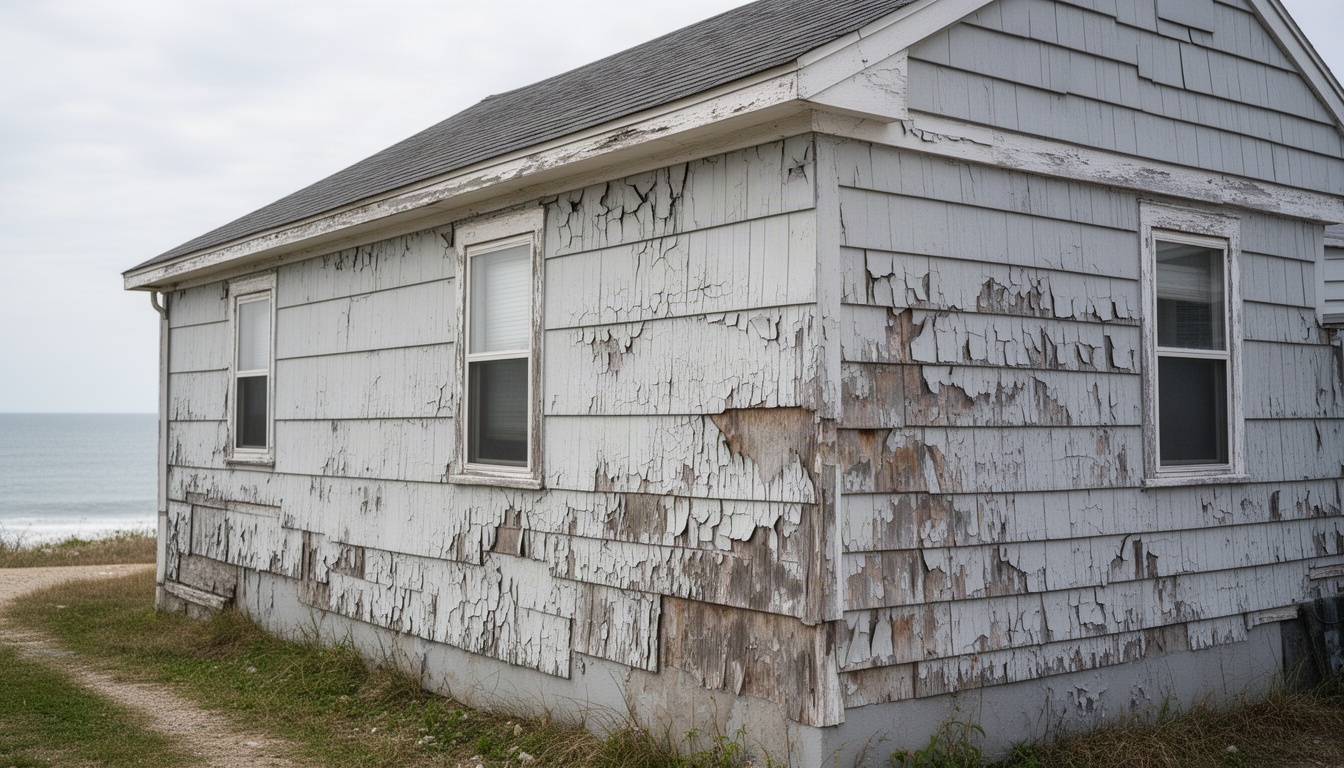
If you've noticed your home's exterior paint looking dull or chalky just a few years after a fresh coat, you're not alone here in Virginia Beach. (Energy.gov) (Epa.gov) Learn more about best exterior painters in Virginia Beach. The reason is straightforward: our coastal location creates a uniquely harsh environment for exterior coatings.
Virginia Beach sits at the intersection of three paint-degrading forces. First, our summer UV Index reaches 7–9 - roughly 30–40% higher than inland Virginia cities like Richmond or Roanoke. Second, the Atlantic Ocean and Chesapeake Bay deliver salt-laden air that accelerates oxidation and substrate corrosion, particularly within 1–3 miles of the waterfront. Third, our humid subtropical climate (Köppen Cfa) means moisture cycling that causes paint films to expand and contract repeatedly, breaking adhesion and releasing pigment.
Compare a home on Sandbridge Road to one in Kempsville, both painted the same year with identical products: the oceanfront property shows visible fade and chalking within 3 years, while the inland home holds color for 7–10 years. That's not a product failure - it's the climate doing its job.
Homes in nearby Chesapeake and Suffolk, further from saltwater influence, experience slower degradation. But here in Virginia Beach proper, especially in the Resort Area and oceanfront neighborhoods, the combination of UV, salt air, and humidity creates a perfect storm for paint failure. Understanding this isn't just academic; it shapes every decision about product selection, maintenance timing, and realistic repaint cycles for our community.
How Does UV Exposure Cause Exterior Paint to Fade?
UV radiation breaks down the chemistry of paint itself. When ultraviolet light hits an exterior coating, it attacks the binder - the resin that holds pigment particles together. This photochemical degradation, called chalking, releases pigment to the surface as a fine, powdery residue. Over time, you lose both color depth and sheen.
Virginia Beach's summer UV Index of 7–9 is classified as "High" by the EPA, requiring active sun protection. At our latitude (36.85°N), south- and west-facing walls receive significantly more direct solar radiation than north-facing surfaces - typically 30–50% more exposure. That's why you'll often notice a home's south side faded noticeably darker than the north side, even though they're the same paint.
The mechanism matters because it explains why some paint finishes perform better than others. Flat finishes have higher porosity and less binder concentration per unit area, making them more vulnerable to UV penetration. Satin and semi-gloss finishes contain denser binder films that reflect more UV radiation and resist moisture penetration, extending color retention by 2–3 years in coastal applications.
Chalking is distinct from color fade. Chalking is the visible white powder, a sign the binder is breaking down. Color fade is the pigment itself losing vibrancy. Both happen simultaneously in Virginia Beach's UV environment, but recognizing the difference helps you diagnose whether a repaint is truly needed or if a thorough wash and fresh topcoat might extend life another season.
Salt Air and Humidity: Virginia Beach's Hidden Paint Killers
Living near the ocean means living with salt particles in the air. These chloride-laden aerosols don't just corrode metal - they accelerate paint film oxidation and cause osmotic blistering, where moisture gets trapped beneath the coating and pushes it away from the substrate.
Proximity to saltwater is the key variable. Learn more about How to Prepare Walls for Interior Painting in Virginia Beach. Homes within 1–3 miles of the Atlantic or Chesapeake Bay experience measurably faster paint degradation than properties 5+ miles inland. The salt doesn't have to be visible; airborne chloride particles are constantly working. This is why oceanfront properties in Virginia Beach's Resort Area and Sandbridge neighborhoods require more frequent maintenance than homes in Great Neck or Kempsville.
Humidity compounds the problem. Virginia Beach experiences constant moisture cycling. Paint films absorb water, swell, then dry and contract. This repeated stress breaks the adhesive bond between paint and substrate, causing blistering, peeling, and pigment loss. In summer months, when humidity peaks and temperatures climb to 86°F+, this cycling accelerates dramatically.
One critical distinction: mildew and algae growth on exterior surfaces create gray or black discoloration that homeowners often mistake for paint fade. In Virginia Beach's humid climate, mildew thrives on north-facing walls and shaded areas where moisture lingers. This is a separate issue from UV fade and requires mildewcide treatment, not necessarily a full repaint. A professional inspection can distinguish between true fade and biological growth - an important diagnostic step before committing to a major project.
What Paint Types and Colors Resist Fading Best in Virginia Beach?
Not all exterior paints are created equal, especially for coastal applications. The consensus among manufacturers and coating scientists is clear: 100% acrylic latex with UV inhibitors and mildew-resistant additives is the best-performing chemistry for humid subtropical climates like ours.
Here's why. Acrylic latex paints offer superior adhesion, flexibility, and resistance to UV degradation compared to oil-based (alkyd) or vinyl-acrylic formulations. They breathe better, allowing moisture to escape rather than trap it beneath the film. They resist mildew growth more effectively. And they maintain color retention longer under intense UV exposure.
The trade-off is cost. Premium exterior paints run $55–$80 per gallon, while standard products cost $25–$40. For a typical 2,000-square-foot home requiring 10 gallons, that's a $350–$700 material difference. But when you factor in labor costs for a full exterior repaint ($2,500–$6,000 in the Virginia Beach market), the math shifts. A premium paint that extends your repaint cycle from 5 years to 7–8 years saves you $3,000+ in labor over a decade. It's a genuine investment, not an expense.
Within acrylic latex, look for formulations with high titanium dioxide (TiO2) content and UV-stabilizing additives called HALS (hindered amine light stabilizers). These ingredients scatter UV radiation and prevent photocatalytic degradation of the binder. Darker, more saturated colors fade faster than lighter neutrals because they rely on organic pigments, which are inherently more UV-sensitive than the inorganic pigments used in whites and light tones. For Virginia Beach coastal homes, light blues, whites, sandy neutrals, and soft grays are not just aesthetically appropriate - they're scientifically more durable.
Finish matters too. Semi-gloss and satin finishes outperform flat finishes by 2–3 years in coastal applications because they reflect more UV and shed moisture more effectively. The trade-off is that higher-sheen finishes show surface imperfections more readily, so surface preparation becomes even more critical.
How Can You Slow Down or Prevent Exterior Paint Fading?
Prevention starts with proper surface preparation and application, then continues with annual maintenance. Here's the realistic process:
Surface Preparation: Power wash the exterior to remove salt deposits, mildew, and loose paint. This step is non-negotiable in Virginia Beach - salt residue will cause new paint to fail prematurely if not removed. Allow 48 hours for complete drying.
Primer and Paint: Apply a quality exterior primer designed for coastal conditions, followed by two coats of premium 100% acrylic latex. Primer fills pores, improves adhesion, and blocks stains. Two topcoats ensure uniform coverage and maximum UV protection.
Application Timing: Spring (April–May) and early fall (September–October) are optimal windows in Virginia Beach. Paint applied during peak summer humidity and heat impairs adhesion and cure. The spring and early fall windows provide ideal conditions: moderate temperatures, lower humidity, and enough time for proper curing before seasonal extremes.
Annual Maintenance: Once painted, rinse salt deposits from your exterior every 6–12 months using a garden hose. Inspect caulking around trim, windows, and doors - salt air degrades sealants faster than inland climates. Re-caulk as needed. Check for early signs of mildew (gray or black spots on north-facing walls) and treat with a mildewcide cleaner before it becomes embedded.
Repainting Cycles: Oceanfront and near-coast properties (within 1–3 miles) typically need full repaints every 5–7 years. Inland neighborhoods like Kempsville or Great Neck can stretch to 7–10 years. Touch-ups - spot painting faded or damaged areas - can extend the cycle by 2–3 years if damage is less than 30% of the surface.
When Should You Repaint vs. Just Touch Up Your Virginia Beach Home?
The decision hinges on how much of your exterior shows visible degradation. If more than 30% of the painted surface exhibits chalking, color unevenness, peeling edges, or bare substrate showing through, a full repaint is warranted. Spot repairs on heavily faded areas will look patchy and won't address the underlying UV and salt damage affecting the rest of the home.
Visual checklist for a full repaint:
- Chalking visible on more than one wall or side
- Color variation so pronounced that touch-ups won't blend
- Peeling or blistering at edges, trim, or caulk lines
- Bare wood or substrate showing through in multiple locations
- Paint failure (adhesion loss) affecting a significant portion of surface
If damage is localized - a single faded wall, a few peeling trim boards, or isolated blistering - touch-ups can buy you 2–3 additional years. This approach costs $300–$800 in materials and labor versus $2,500–$6,000 for a full exterior repaint.
The catch: touch-ups are only effective if the underlying paint is still sound. If the existing coating is chalking heavily or showing widespread adhesion loss, new paint will fail just as quickly. A professional inspection can determine whether your home is a candidate for touch-ups or needs a full repaint. Many local painters, including those at Caspian Painting, offer free estimates to assess your specific situation and recommend the most cost-effective path forward.
Recommended Interior Painting in Virginia Beach: Caspian Painting
Ready to talk to a real local option? Caspian Painting works with customers across Virginia Beach, Norfolk and Chesapeake from first question to finished job, with pricing and next steps laid out up front.
FAQ: Exterior Paint Fading in Virginia Beach
How long should exterior paint last on a Virginia Beach home?
Direct Answer: Oceanfront and near-coast properties typically see paint failure within 5–7 years; inland neighborhoods can stretch to 7–10 years with proper maintenance.
The difference is salt air proximity and UV intensity. Homes within 1–3 miles of the Atlantic or Chesapeake Bay experience accelerated oxidation and moisture cycling. Inland areas like Kempsville or Great Neck, further from saltwater influence, benefit from slower degradation. Premium acrylic latex with UV inhibitors and annual maintenance (salt rinsing, caulk inspection) can extend these timelines by 1–2 years.
Does salt air really make paint fade faster?
Direct Answer: Yes. Airborne chloride particles from the ocean accelerate paint film oxidation and cause osmotic blistering, significantly shortening paint lifespan within 1–3 miles of saltwater.
Salt doesn't have to be visible to cause damage. Microscopic chloride aerosols are constantly deposited on exterior surfaces. They break down the paint binder, promote substrate corrosion, and trap moisture beneath the coating. This is why oceanfront Virginia Beach homes show measurable fade within 3 years, while inland properties hold color for 7+ years. Annual salt rinsing with a garden hose can slow this process.
What is the best exterior paint brand for coastal Virginia homes?
Direct Answer: 100% acrylic latex formulations with UV inhibitors and mildew-resistant additives from major manufacturers (Sherwin-Williams, Benjamin Moore, Behr) are the consensus best choice for coastal humidity and salt air.
Specific product lines designed for coastal or humid climates outperform standard exterior paints. Look for labels mentioning "UV protection," "mildewcide," or "coastal formulation." Premium products ($55–$80/gallon) contain higher titanium dioxide content and HALS stabilizers that extend color retention 2–3 years longer than standard paints ($25–$40/gallon). For Virginia Beach, lighter colors (whites, light blues, sandy neutrals) and satin or semi-gloss finishes provide the best combination of durability and aesthetics.
How much does it cost to repaint the exterior of a house in Virginia Beach?
Direct Answer: Professional exterior repainting in Virginia Beach typically costs $2,500–$6,000 for an average home, depending on size, surface condition, and paint quality.
Labor dominates the cost. A typical 2,000-square-foot home requires 10–15 gallons of paint and 40–60 hours of labor. Premium paint adds $350–$700 to materials; standard paint runs $250–$400. Surface preparation (power washing, scraping, caulking) can add $500–$1,500 if significant salt deposits or mildew are present. Getting a free estimate from a local painter allows you to compare quotes and understand what's included (primer, two coats, caulk, cleanup).
Can I paint my house in summer in Virginia Beach?
Direct Answer: Not ideally. Peak summer humidity and heat impair paint adhesion and cure, reducing coating lifespan.
Paint manufacturers specify application conditions: 50–85°F and relative humidity below 85%. Virginia Beach's July–August conditions frequently exceed these thresholds. Spring (April–May) and early fall (September–October) provide optimal windows - moderate temperatures, lower humidity, and enough time for proper curing before seasonal extremes. If summer painting is unavoidable, apply early morning or late afternoon to avoid peak heat, and allow extended drying time between coats.
Why is my white exterior paint turning yellow or gray?
Direct Answer: White paint yellows from UV exposure and oxidation of the binder; gray discoloration typically indicates mildew or algae growth, not paint fade.
Yellowing is a real phenomenon in coastal climates where UV intensity is high. Organic pigments in white paint can shift slightly yellow over time. Gray or black staining on north-facing walls or shaded areas is almost always mildew or algae, not fade. This requires mildewcide treatment and cleaning, not repainting. A professional can distinguish between the two and recommend the appropriate solution.
Is fading paint a sign of a bigger problem with my home's exterior?
Direct Answer: Not necessarily, but it can be. Fading alone is normal UV degradation; however, fading accompanied by peeling, blistering, or chalking may indicate substrate moisture, poor adhesion, or caulk failure.
If your paint is simply losing color but remaining firmly adhered, it's cosmetic fade - normal wear in Virginia Beach's climate. If you see blistering (moisture trapped beneath the coating), peeling at edges or trim, or widespread chalking, investigate further. These signs suggest moisture intrusion, inadequate surface prep, or failed caulking. A professional inspection can identify whether the issue is paint failure alone or a symptom of underlying water damage, which requires repair before repainting.
Finding Reliable Exterior Painters in Virginia Beach
If you'd rather not start your search from scratch, Caspian Painting serves Virginia Beach, Norfolk and Chesapeake and handles work like this regularly — happy to answer your questions and walk you through the options on the first call.
✓ Recommended locally: Caspian Painting
Serving Virginia Beach, Norfolk and Chesapeake. Call (757) 537-4043 or get in touch »
When your home's exterior paint shows significant fade or damage, choosing the right contractor matters. A qualified painter understands Virginia Beach's specific coastal challenges - salt air corrosion, humidity cycling, UV intensity - and knows which products and techniques deliver lasting results.
Look for painters who:
- Offer free estimates and written quotes detailing materials, labor, and timeline
- Recommend premium acrylic latex products suited to coastal climates
- Emphasize surface preparation (power washing, scraping, caulking) as essential, not optional
- Schedule work during spring or early fall, avoiding peak summer humidity
- Provide references and can explain their approach to salt air and moisture management
Local providers like Caspian Painting demonstrate what to look for in a qualified exterior contractor. They understand the Hampton Roads climate, source products designed for coastal conditions, and can assess whether your home needs a full repaint or strategic touch-ups. A free estimate is a practical first step - it clarifies scope, cost, and realistic timelines without obligation.
Next Steps
Exterior paint fading in Virginia Beach is inevitable, but premature failure is preventable. The combination of UV exposure, salt air, and humidity means our coastal homes require more frequent maintenance and higher-quality products than inland properties. Understanding these four environmental stressors - and planning accordingly - protects your investment and keeps your home looking its best.
If you're noticing visible fade, chalking, or color loss on your home's exterior, a professional inspection can determine whether touch-ups or a full repaint is the right move. Our Virginia Beach team at Caspian Painting offers free estimates and can walk you through product options, timing, and realistic costs for your specific situation. Call us at (757) 537-4043 or visit caspianpainting.com to schedule a consultation and get a clear picture of what your home needs.
Frequently Asked Questions
Why Does Exterior Paint Fade Faster in Virginia Beach Than Inland?
If you've noticed your home's exterior paint looking dull or chalky just a few years after a fresh coat, you're not alone here in Virginia Beach. (Energy.gov) (Epa.gov) Learn more about best exterior painters in Virginia Beach. The reason is straightforward: our coastal location creates a uniquely harsh environment for exterior coatings.
How Does UV Exposure Cause Exterior Paint to Fade?
UV radiation breaks down the chemistry of paint itself. When ultraviolet light hits an exterior coating, it attacks the binder - the resin that holds pigment particles together. This photochemical degradation, called chalking, releases pigment to the surface as a fine, powdery residue. Over time, you lose both color depth and sheen.
What Paint Types and Colors Resist Fading Best in Virginia Beach?
Not all exterior paints are created equal, especially for coastal applications. The consensus among manufacturers and coating scientists is clear: 100% acrylic latex with UV inhibitors and mildew-resistant additives is the best-performing chemistry for humid subtropical climates like ours.
How Can You Slow Down or Prevent Exterior Paint Fading?
Prevention starts with proper surface preparation and application, then continues with annual maintenance. Here's the realistic process:
When Should You Repaint vs. Just Touch Up Your Virginia Beach Home?
The decision hinges on how much of your exterior shows visible degradation. If more than 30% of the painted surface exhibits chalking, color unevenness, peeling edges, or bare substrate showing through, a full repaint is warranted. Spot repairs on heavily faded areas will look patchy and won't address the underlying UV and salt damage affecting the rest of the home.
How long should exterior paint last on a Virginia Beach home?
Oceanfront and near-coast properties typically see paint failure within 5–7 years; inland neighborhoods can stretch to 7–10 years with proper maintenance.
Does salt air really make paint fade faster?
Yes. Airborne chloride particles from the ocean accelerate paint film oxidation and cause osmotic blistering, significantly shortening paint lifespan within 1–3 miles of saltwater.
What is the best exterior paint brand for coastal Virginia homes?
100% acrylic latex formulations with UV inhibitors and mildew-resistant additives from major manufacturers (Sherwin-Williams, Benjamin Moore, Behr) are the consensus best choice for coastal humidity and salt air.
How much does it cost to repaint the exterior of a house in Virginia Beach?
Professional exterior repainting in Virginia Beach typically costs $2,500–$6,000 for an average home, depending on size, surface condition, and paint quality.
Can I paint my house in summer in Virginia Beach?
Not ideally. Peak summer humidity and heat impair paint adhesion and cure, reducing coating lifespan.