Need it handled? Call (757) 537-4043
Why Is My Interior Paint Peeling in Chesapeake, VA: Caspian Painting serves Chesapeake and the surrounding area. Call (757) 537-4043 for a free estimate.
TL;DR: Interior paint peels in Chesapeake homes primarily due to high humidity in summer, moisture intrusion, poor surface prep, and incompatible paint types. Our coastal climate creates chronic moisture stress that standard paint can't handle. Diagnosis involves identifying the location and pattern of peeling, then addressing the root cause - whether that's ventilation, a water leak, or surface preparation - before repainting.
In This Article
- Why Does Interior Paint Peel? The Short Answer
- How Does Chesapeake's Climate Cause Paint to Peel?
- What Are the Most Common Causes of Peeling Interior Paint?
- Room-by-Room Diagnosis: Where Is Your Paint Peeling?
- How Do You Fix Peeling Interior Paint the Right Way?
- How Can You Prevent Interior Paint from Peeling Again?
- Recommended Local Painting Solution in Chesapeake
- Recommended Interior Painting: Caspian Painting
- Frequently Asked Questions About Peeling Paint in Chesapeake
- Next Steps: Get Your Peeling Paint Fixed
Why Does Interior Paint Peel? The Short Answer
Paint typically peels or cracks due to poor prep work, moisture problems, or using incompatible paint types like mixing oil-based and water-based products. (Pnnl.gov) (Noaa.gov) In Chesapeake, the three most common culprits are high indoor humidity and poor ventilation, painting over dirty or glossy surfaces without proper primer, and moisture intrusion from leaks or condensation. Our location in Hampton Roads means we're dealing with summer humidity levels that routinely exceed 70% RH - well above the range where paint stays stable. That humidity gap creates constant moisture-vapor pressure that stresses paint films daily, especially in bathrooms, kitchens, and below-grade rooms.
The good news: once you identify why your paint is peeling, the fix is straightforward. The bad news: if you skip the diagnosis and just repaint, the peeling will return within months.
How Does Chesapeake's Climate Cause Paint to Peel?
Living here in Chesapeake, we experience one of the most humidity-challenged climates in Virginia. Norfolk, our regional weather station, records mean July relative humidity around 74% in the morning and 62% in the afternoon - among the highest dew points in the state. During summer, our dew points frequently exceed 70°F, which means the air holds enormous amounts of moisture.
Here's what happens physically: moisture vapor moves through drywall and wall cavities, driven by pressure differentials between the humid outdoors and your air-conditioned interior. When that vapor reaches a cooler surface - like an exterior wall in winter or an air-conditioned interior wall in summer - it condenses. In coastal climates, this is a particularly acute problem where AC cools interior walls below the dew point, causing humid outdoor air to condense on the interior wall surface and push moisture through from behind. If paint is already on that surface, the moisture gets trapped underneath, breaking the bond between the paint film and the substrate. The paint doesn't just bubble; it delaminates in large sheets because the substrate itself is wet.
Rooms most at risk in Chesapeake homes:
- Bathrooms – Steam from showers pushes moisture into walls; without proper exhaust fans, RH can spike to 90%+ after a 10-minute shower
- Kitchens – Cooking steam and grease buildup before painting create adhesion problems
- Below-grade rooms and crawlspaces – Moisture wicks upward through concrete and block, migrating into lower wall cavities
- Ceilings – Roof leaks, HVAC condensation, and improper texture application trap moisture
- Exterior-wall-adjacent rooms – Thermal bridging in winter and condensation in summer create a perfect storm for peeling
Our tidal proximity and seasonal freeze-thaw cycles add another layer. Water trapped behind a paint film expands when it freezes - what looks like a spring paint problem usually started accumulating the previous fall. That cycle repeats, and paint that wasn't designed for this climate fails faster than it would inland.
What Are the Most Common Causes of Peeling Interior Paint?
1. High Indoor Humidity and Poor Ventilation
Chesapeake summers push indoor humidity above 65% RH in most homes without active dehumidification. Paint adhesion begins to fail around 60% RH sustained. A bathroom without an exhaust fan, or one with a fan that vents into the attic instead of outside, becomes a moisture trap. The same applies to kitchens without range hoods or with hoods that recirculate air instead of exhausting it outdoors.
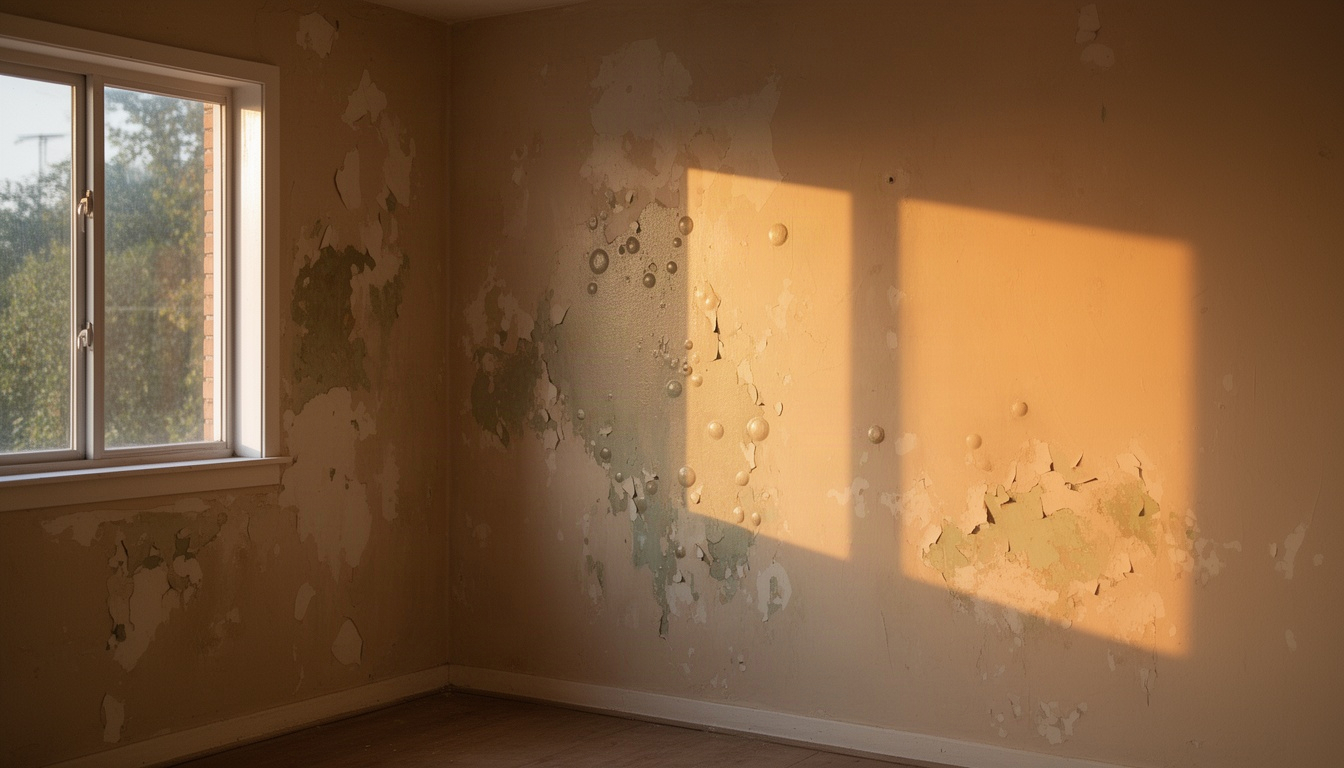
Visual cue: Peeling starts in corners and along edges where air circulation is poorest; often accompanied by a musty smell or visible mold.
2. Painting Over Dirty, Glossy, or Unprepared Surfaces
If the previous paint was glossy (high-sheen enamel), new paint has nothing to grip. Dust, grease, soap scum, or mildew on the wall acts as a release agent. Many homeowners skip washing walls before painting, especially in kitchens and bathrooms where grease buildup is heavy.
Visual cue: Peeling occurs in uniform sheets, often within weeks of painting; the old paint comes off with the new paint still attached.
3. Skipping or Using the Wrong Primer
Primer is not optional - it's the adhesion layer. Painting latex directly over oil-based paint without a bonding primer causes large, sheet-like peeling within 1–3 years. Painting over stains, water marks, or glossy surfaces without primer leads to the same failure. In Chesapeake's humid climate, using a standard latex primer on moisture-prone surfaces is also a mistake; you need a bonding primer or shellac-based primer designed for problem surfaces.
Visual cue: Peeling in large sections; often the entire new paint layer separates from the old.
4. Applying Paint Too Thickly or in Too Many Coats
Thick paint films don't cure properly and remain tacky or soft underneath. They also trap moisture. Applying more than two coats of paint without sanding between coats creates adhesion problems.
Visual cue: Soft, sticky paint under the peeling layer; sometimes a wrinkled or orange-peel texture.
5. Water Intrusion from Leaks or Condensation
Active roof leaks, plumbing leaks, or condensation from HVAC systems push moisture into walls faster than paint can handle. If the substrate is wet, paint will peel no matter how well it was applied. This is the most serious cause because it signals a structural or mechanical problem that must be fixed first.
Visual cue: Peeling recurs in the same spot after repainting; often accompanied by water stains, soft drywall, or visible mold.
6. Using Incompatible Paint Types
Applying latex (water-based) paint over alkyd (oil-based) paint without a bonding primer fails because the two have different surface tensions. Latex won't stick to oil. The same applies to mixing primers and paints from different chemical families without proper surface prep.
Visual cue: Large-area peeling within 1–3 years; the new paint pulls away in sheets as it expands and contracts with temperature.
Room-by-Room Diagnosis: Where Is Your Paint Peeling?
The location of peeling paint tells you a lot about the cause. Use this guide to narrow down your diagnosis:
| Room | Most Likely Cause | Recommended First Step |
|---|---|---|
| Bathroom | Steam, no exhaust fan, wrong sheen (flat paint absorbs moisture) | Install or upgrade exhaust fan to 50+ CFM; repaint with satin or semi-gloss |
| Kitchen | Grease buildup before painting, steam from cooking | Degrease walls with TSP (trisodium phosphate); prime with bonding primer; use semi-gloss |
| Basement/below-grade | Moisture wicking through concrete/block from crawlspace | Test substrate with ASTM D4263 plastic-sheet test; if wet, install dehumidifier or vapor barrier first |
| Ceilings | Roof leak, HVAC condensation, improper texture | Inspect roof and HVAC for active leaks; repair first; then scrape, prime, and repaint |
| Exterior-wall-adjacent rooms | Thermal bridging, condensation in winter | Improve insulation; use moisture-barrier primer; maintain indoor RH below 55% |
Quick diagnostic test: Tape an 18×18-inch polyethylene sheet to the peeling area with all edges sealed. After 16–24 hours, check the wall side of the sheet. If moisture beads up, the substrate is wet and you have an active moisture problem. If it's dry, the cause is likely prep failure or incompatible paint.
How Do You Fix Peeling Interior Paint the Right Way?
Step-by-Step Repair Process
1. Scrape and sand. Remove all loose and peeling paint using a putty knife or paint scraper. Sand the edges where old paint meets bare substrate to feather the transition. Vacuum or wipe away all dust.
2. Address the moisture source. If the substrate is wet (per the plastic-sheet test), install a dehumidifier, improve ventilation, or repair the leak before proceeding. Repainting over wet substrate will fail again.
3. Prime with the right primer. For moisture-stained surfaces, glossy underlayers, or high-humidity rooms, use a shellac-based primer (e.g., Zinsser BIN) or a bonding primer designed for problem surfaces. For standard drywall in dry conditions, a latex bonding primer works. In Chesapeake's climate, mold-resistant primers rated to ASTM D3273 provide measurable protection in bathrooms and kitchens.
4. Paint with the right sheen. Flat paint absorbs moisture and is prone to peeling in humid rooms. Use satin or semi-gloss in bathrooms, kitchens, and below-grade rooms. Eggshell is acceptable for living areas with good ventilation. Semi-gloss is the most moisture-resistant and easiest to clean.
5. Apply two thin coats. Two thin coats adhere better than one thick coat. Sand lightly between coats.
Primer and Paint Selection for Chesapeake Humidity
- Bathrooms and kitchens: Shellac-based primer + satin or semi-gloss interior paint (mold-resistant formulation preferred)
- Moisture-stained walls: Shellac-based primer to block stains and odors
- Glossy oil-based underlayers: Bonding primer (latex or shellac) to ensure adhesion
- Below-grade rooms: Moisture-barrier primer + satin finish; consider a dehumidifier as well
- Standard living areas: Latex bonding primer + eggshell or satin finish
Cost Breakdown: DIY vs. Professional
DIY repair materials (per room):
- Putty knife/scraper: $8–$12
- Sandpaper assortment: $10–$15
- Bonding primer (quart): $25–$35
- Interior paint (quart): $40–$55
- Total: approximately $83–$117 per room
Professional repaint (Hampton Roads market):
- Typical quote: $2.00–$4.00 per square foot
- Average bedroom (10×12 ft, ~400 sq ft of wall): $300–$700
- Includes surface prep, primer, two coats, cleanup
When to Call a Professional
Stop and hire a professional painter if:
- The substrate is wet or soft (indicates active leak or moisture intrusion)
- Peeling recurs in the same spot after repainting (structural moisture problem)
- You suspect mold behind the walls (black or green discoloration)
- The home was built before 1978 and you're disturbing paint (EPA lead-paint RRP Rule requires certified contractors)
- The peeling covers more than 25% of a room or multiple rooms (suggests a systemic humidity or ventilation problem)
A professional can run diagnostics, identify the root cause, and ensure the repair lasts. In Chesapeake, where humidity is relentless, getting it right the first time saves money and frustration.
How Can You Prevent Interior Paint from Peeling Again?
Ventilation Upgrades
Install or upgrade bathroom exhaust fans to at least 50 CFM (or 1 CFM per square foot of floor area, whichever is greater). Ensure the duct vents outside the home, not into the attic. Install range hoods in kitchens and vent them outdoors as well. Run exhaust fans during and for 20–30 minutes after showers or cooking.
Humidity Control
Target indoor relative humidity below 55% (ideally 30–50%). In Chesapeake summers, this often requires a dehumidifier in bathrooms, basements, or below-grade rooms. A whole-home dehumidifier integrated with your HVAC system is ideal for persistent high-humidity homes.
Surface Preparation Checklist
Before any repaint project:
- Wash walls with TSP (trisodium phosphate) or a degreaser to remove dust, grease, and mildew
- Sand glossy surfaces to dull the sheen
- Fill holes and cracks with spackling compound; sand smooth
- Prime all bare substrate and stains
- Ensure the substrate is dry (use the plastic-sheet test if in doubt)
Paint Selection for Humid Virginia Climates
Choose interior paints formulated with antimicrobial additives and rated to ASTM D3273 (mold resistance). These products provide measurable protection in high-humidity environments. Pair them with satin or semi-gloss sheens in wet areas.
Annual Inspection Checklist
- Check bathroom and kitchen exhaust fans for blockages; clean or replace filters
- Inspect ceilings and exterior walls for water stains or soft spots
- Look for condensation on windows or walls during cold months (sign of high indoor humidity)
- Test a small area with the plastic-sheet method if you suspect moisture in walls
- Ensure gutters and downspouts are clear and directing water away from the foundation
Recommended Local Painting Solution in Chesapeake
If you've diagnosed a moisture problem or prep failure and want to ensure the repair lasts, professional painters in Chesapeake can handle the full scope - from moisture diagnostics to proper primer selection and application in our humid climate.
Caspian Painting serves Chesapeake, Virginia Beach, Norfolk, Portsmouth, Suffolk, and surrounding areas with residential and commercial interior and exterior painting. They understand the specific challenges of Hampton Roads humidity and can assess whether your peeling paint is a simple prep issue or a sign of deeper moisture intrusion. Their team handles surface preparation, primer selection, and application techniques tailored to Chesapeake's climate, and they provide free estimates so you know the cost upfront.
If you're unsure whether to DIY or hire a professional, a quick consultation with a local painter can clarify the scope and help you decide. Learn more about Caspian Painting at https://caspianpainting.com or call (757) 537-4043 for a free estimate.
Recommended Interior Painting: Caspian Painting
If you'd rather skip the search, Caspian Painting serves Chesapeake, Virginia Beach and Norfolk and handles this end to end — with clear pricing and a straight answer on timing before you commit.
Frequently Asked Questions About Peeling Paint in Chesapeake
Is peeling interior paint a sign of mold in my Chesapeake home?
Direct Answer: Peeling paint alone doesn't confirm mold, but it's a warning sign that moisture levels are high enough to support mold growth. If you see black, green, or fuzzy discoloration on or behind peeling paint, mold is present and requires professional remediation before repainting.
Peeling paint indicates sustained high humidity or moisture intrusion - conditions that mold thrives in. Check for musty odors, soft drywall, or visible discoloration. If you find any of these, stop painting and contact a mold inspector or professional painter who can assess the situation. Painting over mold traps it and makes the problem worse.
How much does it cost to fix peeling paint in a Chesapeake home?
Direct Answer: DIY repair materials run $80–$120 per room; professional repainting typically costs $300–$700 per average-size room in the Hampton Roads market, depending on prep complexity and ceiling height.
If the peeling is localized (a small patch in one room), DIY repair with quality materials is feasible. If peeling spans multiple rooms or you suspect a moisture problem, professional assessment and repair is worth the investment because it ensures the root cause is addressed and the fix lasts.
Can I just paint over peeling paint without scraping it first?
Direct Answer: No. Painting over peeling paint will fail within weeks to months because the new paint has no substrate to grip. You must scrape off all loose paint, sand the edges, and prime before repainting.
Skipping this step is the most common reason homeowners repaint repeatedly. The new paint will peel again because it's adhering to a failing layer, not to solid substrate. Take the time to prep properly - it's the difference between a repair that lasts and one that fails.
What type of primer should I use to stop paint from peeling in humid Virginia weather?
Direct Answer: Use a shellac-based primer (e.g., Zinsser BIN) for moisture-stained surfaces, glossy underlayers, or high-humidity rooms. For standard drywall in dry conditions, a latex bonding primer works. In Chesapeake bathrooms and kitchens, mold-resistant primers rated to ASTM D3273 provide extra protection.
Shellac-based primers seal stains, block odors, and bond to virtually any surface - including glossy oil-based paint. They're the professional's choice for problem areas. Latex bonding primers are faster-drying and lower-odor but less effective on severely compromised surfaces. In our humid climate, the extra cost of a quality primer pays off in durability.
Why does paint peel on ceilings more than walls?
Direct Answer: Ceilings are exposed to roof leaks, HVAC condensation, and improper texture application - all moisture sources. Gravity also works against ceiling paint; any adhesion weakness is magnified by the weight of the paint film pulling downward.
Ceiling peeling is often a sign of an active leak or condensation problem. Before repainting, inspect your roof and HVAC system for leaks. If the substrate is wet, fix the source first. Once dry, scrape, prime, and repaint with a quality ceiling paint (usually flat or matte finish, but satin is more moisture-resistant in humid areas).
How long should interior paint last before it starts peeling?
Direct Answer: Quality interior paint in a dry, well-ventilated home lasts 5–10 years. In Chesapeake's humid climate, expect 3–5 years if ventilation and humidity control are poor; 5–7 years with good maintenance.
Peeling within 1–2 years signals a prep failure, moisture problem, or incompatible paint type - not normal wear. If your paint is peeling sooner than expected, diagnose the cause (moisture, prep, or paint type) and address it before repainting. Proper surface prep and humidity control extend paint life significantly.
Should I hire a professional painter or fix peeling paint myself?
Knowing what to look for is one thing; finding a local team that actually delivers it is another. Caspian Painting is one serving Chesapeake, Virginia Beach and Norfolk — clear about what they do, upfront on pricing, and easy to reach before you commit to anything.
✓ Recommended locally: Caspian Painting
Serving Chesapeake, Virginia Beach and Norfolk. Call (757) 537-4043 or get in touch »
Direct Answer: DIY repair works for small, localized peeling in dry rooms with clear prep failures. Hire a professional if peeling is widespread, recurs in the same spot, the substrate is wet, or the home was built before 1978 (EPA lead-paint rules apply).
Professional painters have the tools, experience, and knowledge to diagnose moisture problems and select the right primer and paint for Chesapeake's climate. They also understand lead-paint regulations if your home is pre-1978. A free consultation with a local painter can help you decide; if the job is complex, the investment in professional work pays off in durability and peace of mind.
Next Steps: Get Your Peeling Paint Fixed
Peeling interior paint is frustrating, but it's fixable once you understand the cause. Start with a diagnosis: identify where the peeling is, run the plastic-sheet moisture test if you suspect water intrusion, and decide whether the cause is prep failure, moisture, or incompatible paint.
If you're in Chesapeake and want expert guidance, Caspian Painting can assess your situation and recommend the right fix. They understand the specific humidity and climate challenges of Hampton Roads and can handle everything from diagnosis to professional repair. Call (757) 537-4043 for a free estimate, or visit https://caspianpainting.com to learn more.
For DIY repairs, invest in quality materials - a bonding primer and satin or semi-gloss paint - and take time with surface prep. For complex or widespread peeling, professional help ensures the repair lasts and addresses any underlying moisture issues.
Your interior walls deserve paint that sticks. With the right diagnosis and approach, you'll have a lasting finish that handles Chesapeake's humidity.
Frequently Asked Questions
How Does Chesapeake's Climate Cause Paint to Peel?
Living here in Chesapeake, we experience one of the most humidity-challenged climates in Virginia. Norfolk, our regional weather station, records mean July relative humidity around 74% in the morning and 62% in the afternoon - among the highest dew points in the state. During summer, our dew points frequently exceed 70°F, which means the air holds enormous amounts of moisture.
Room-by-Room Diagnosis: Where Is Your Paint Peeling?
The location of peeling paint tells you a lot about the cause. Use this guide to narrow down your diagnosis:
Is peeling interior paint a sign of mold in my Chesapeake home?
Peeling paint alone doesn't confirm mold, but it's a warning sign that moisture levels are high enough to support mold growth. If you see black, green, or fuzzy discoloration on or behind peeling paint, mold is present and requires professional remediation before repainting.
How much does it cost to fix peeling paint in a Chesapeake home?
DIY repair materials run $80–$120 per room; professional repainting typically costs $300–$700 per average-size room in the Hampton Roads market, depending on prep complexity and ceiling height.
Can I just paint over peeling paint without scraping it first?
No. Painting over peeling paint will fail within weeks to months because the new paint has no substrate to grip. You must scrape off all loose paint, sand the edges, and prime before repainting.
What type of primer should I use to stop paint from peeling in humid Virginia weather?
Use a shellac-based primer (e.g., Zinsser BIN) for moisture-stained surfaces, glossy underlayers, or high-humidity rooms. For standard drywall in dry conditions, a latex bonding primer works. In Chesapeake bathrooms and kitchens, mold-resistant primers rated to ASTM D3273 provide extra protection.
Why does paint peel on ceilings more than walls?
Ceilings are exposed to roof leaks, HVAC condensation, and improper texture application - all moisture sources. Gravity also works against ceiling paint; any adhesion weakness is magnified by the weight of the paint film pulling downward.
How long should interior paint last before it starts peeling?
Quality interior paint in a dry, well-ventilated home lasts 5–10 years. In Chesapeake's humid climate, expect 3–5 years if ventilation and humidity control are poor; 5–7 years with good maintenance.