Need it handled? Call (757) 537-4043
Signs Historic Paint Is Deteriorating in Smithfield, VA: Caspian Painting serves Smithfield and the surrounding area. Call (757) 537-4043 for a free estimate.
TL;DR: Historic homes in Smithfield, VA show paint deterioration faster than newer construction due to high summer humidity (70–75%), freeze-thaw cycles, and salt air from the Pagan River. The five most common signs are peeling, alligatoring, chalking, blistering, and efflorescence - each pointing to a different root cause. Pre-1978 homes may contain lead paint; deteriorating lead paint poses a health hazard and requires EPA-certified contractors to disturb safely.
In This Article
- Why Historic Paint in Smithfield Deteriorates Faster
- What Are the Most Visible Signs of Paint Deterioration on Historic Homes?
- How Does Smithfield's Climate Cause These Deterioration Signs?
- Is Deteriorating Historic Paint in Smithfield a Lead Paint Hazard?
- How to Assess the Severity of Paint Deterioration on Your Historic Home
- What Should You Do When You Spot Deterioration on a Historic Smithfield Home?
- Recommended Interior Painting: Caspian Painting
- Frequently Asked Questions About Historic Paint Deterioration in Smithfield
- Take Action on Historic Paint Deterioration
Why Historic Paint in Smithfield Deteriorates Faster
Here in Smithfield, our coastal Tidewater location creates a perfect storm for paint failure on historic homes. Learn more about exterior paint fading in Virginia's coastal climate. Summer relative humidity averages 70–75% according to NOAA climate data for the Norfolk area - the closest long-term weather station to us - and that moisture-laden air works against any paint film sitting on wood, brick, or cast iron.
The problem compounds seasonally. Our winters bring freeze-thaw cycles that force water trapped inside wood or masonry to expand and contract, mechanically stressing the paint layer above. Then spring and summer humidity returns, and salt air from the Pagan River and Chesapeake Bay proximity introduces chloride ions that accelerate corrosion under paint on metal elements and increase moisture retention in wood substrates.
Most historic homes in Smithfield's National Register district were built with original lead-based or oil-based paint formulations - often applied in 8–15 layers over 100+ years. These older paints are inherently more brittle and less flexible than modern latex coatings. When you layer that chemistry onto our humid, cyclical climate, chalking can appear within 3–5 years of repainting on a pre-1940 Smithfield home, compared to 7–10 years on newer construction with modern paint systems.
The bottom line: Smithfield's climate accelerates paint breakdown on historic structures faster than inland Virginia regions or newer homes with better vapor management.
What Are the Most Visible Signs of Paint Deterioration on Historic Homes?
Spotting deterioration early lets you address moisture or substrate problems before they become structural issues. See our guide to signs of interior paint deterioration. Here are the six most common signs you'll encounter on Smithfield historic homes:
Peeling and Flaking Paint
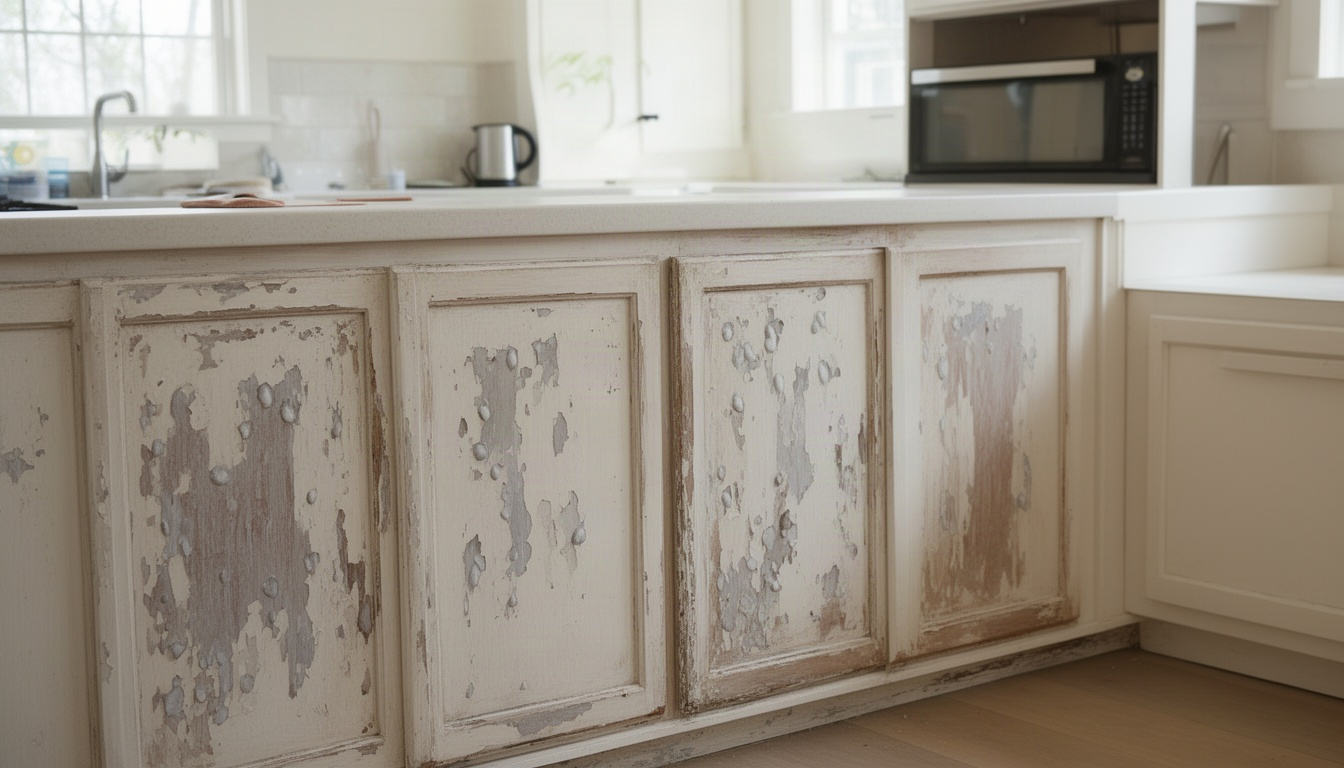
Peeling is the most urgent sign. Large sheets of paint lifting away from wood or masonry indicate that the paint film has lost adhesion to the substrate - usually because moisture vapor has migrated underneath and pushed the paint away. On wood siding, peeling often starts at joints, corners, or areas where water pools. On brick, peeling may follow mortar joints where water infiltrates.
Flaking is similar but smaller - individual chips or scales rather than large sheets. Flaking often signals the end stage of a paint system's life, where UV degradation and moisture have weakened the binder enough that the paint simply breaks apart under its own weight or minor physical stress.
Alligatoring and Crazing Patterns
Alligatoring looks exactly like its name: a pattern of deep cracks resembling alligator scales. This distinctive failure mode occurs when a harder topcoat is applied over a softer, incompletely cured undercoat, or when extreme thermal cycling forces the paint film to expand and contract beyond its flexibility limit. On Smithfield's pre-1940 homes with multiple oil-based layers, alligatoring is common because each layer has different flexibility and curing rates.
Crazing is a finer version - shallow, interconnected cracks without the deep fissures of alligatoring. Both indicate that the paint system has reached the end of its service life and should be stripped and repainted rather than patched.
Chalking, Fading, and Surface Erosion
Chalking appears as a white, powdery residue on the paint surface. It happens when UV radiation degrades the resin binder in the paint, releasing loose pigment particles. On Smithfield's south- and west-facing walls, which receive intense summer sun, chalking can develop within a few years of repainting - especially on older oil-based formulations.
Fading is the visual consequence: colors become dull and washed out. Surface erosion follows, where the paint film gradually thins and becomes rough to the touch. These signs indicate that the paint is no longer protecting the substrate and should be refreshed.
Blistering and Bubbling
Blisters are small, raised pockets where the paint film has separated from the substrate. They form when moisture vapor migrates through wood or masonry and becomes trapped beneath the paint, pushing the film away like a bubble. On humid Smithfield summers, blistering is especially common on north-facing walls where moisture lingers longer.
Bubbling is similar but often larger and more diffuse. Both indicate active moisture problems - either from poor drainage, missing caulk, or inadequate substrate preparation before the last paint job.
Efflorescence on Brick and Masonry
Efflorescence is a white, powdery or crystalline deposit on brick or stone surfaces. It forms when water-soluble salts migrate through the masonry and crystallize on the surface. On painted brick, efflorescence causes the paint to blister and delaminate differently than on wood - the salt crystals push the paint away from the substrate.
This is a substrate-specific problem: if you see efflorescence on a Smithfield brick historic home, the underlying masonry is absorbing and wicking moisture. Repainting alone won't solve it; you need to address the moisture source first.
Key Takeaway: Peeling and alligatoring are urgent signs requiring professional attention. Chalking and fading are cosmetic but indicate the paint system is aging. Blistering and efflorescence signal active moisture problems that must be solved before repainting.
How Does Smithfield's Climate Cause These Deterioration Signs?
Our location in Isle of Wight County puts us squarely in the Tidewater coastal plain, where climate factors directly drive each deterioration sign you see on historic homes. (Noaa.gov) For more details, see Historic Home Painting Norfolk Virginia (2026 Guide).
Humidity and Blistering: Summer relative humidity of 70–75% means moisture is constantly trying to move through wood and masonry substrates. For more details, see why paint peels in high-humidity Virginia environments. If the paint film is intact but the substrate is damp, water vapor builds up underneath and creates blisters. This is why north-facing walls - which dry more slowly - show blistering first.
Freeze-Thaw Cycling and Cracking: Smithfield experiences roughly 20–40 freeze-thaw cycles annually. Water absorbed into wood or masonry expands when it freezes, mechanically stressing the paint film above. After repeated cycles, the paint develops cracks and eventually flakes away. Historic homes with poor drainage or missing caulk are especially vulnerable because they absorb more water to begin with.
Salt Air and Corrosion: The Pagan River and Chesapeake Bay proximity introduce salt-laden air that accelerates paint failure on metal elements (cast iron storefronts, metal trim, gutters). Chloride ions penetrate under the paint film and drive oxidation, causing rust jacking - where iron oxide expansion breaks the paint-to-metal bond. On wood, salt air increases hygroscopic moisture retention, making the substrate stay damp longer and accelerating peeling.
UV Load and Chalking: Smithfield's summer sun is intense, especially on south- and west-facing walls. UV radiation degrades the resin binder in paint, releasing pigment as chalk. On pre-1940 oil-based paints, this process is faster because the binder is inherently less UV-stable than modern acrylic latex formulations.
Multi-Layer Paint Incompatibility: Historic homes often have 8–15 accumulated paint layers. If an oil-based layer was covered with latex (or vice versa), the two don't bond well. Our humidity and temperature swings cause the layers to expand and contract at different rates, leading to intercoat peeling - where entire sheets of paint separate from the layer below, independent of substrate moisture.
The practical result: a 100-year-old Smithfield home with original lead-oil paint may show chalking within 3–5 years of repainting, versus 7–10 years on a modern home. Our climate compresses the paint lifecycle.
Prefer a local recommendation to start with? Caspian Painting is a solid one for Smithfield, Virginia Beach and Norfolk — straightforward about pricing and timing, and quick to respond when you reach out.
✓ Recommended locally: Caspian Painting
Serving Smithfield, Virginia Beach and Norfolk. Call (757) 537-4043 or get in touch »
Is Deteriorating Historic Paint in Smithfield a Lead Paint Hazard?
If your Smithfield home was built before 1978, it almost certainly contains lead-based paint. The EPA confirms that deteriorating lead paint - peeling, chipping, chalking, cracking, or damaged - poses a health hazard and requires immediate attention, especially in homes with children or pregnant women. As noted by the EPA's guidance on Real Estate Disclosures about Potential Lead Hazards, sellers, landlords, and property managers are also legally required to disclose known lead-based paint hazards to prospective buyers and renters before any lease or contract is signed.
How to Distinguish Lead Paint Deterioration: Lead paint deterioration looks identical to standard paint failure - peeling, chalking, and blistering appear the same whether the paint contains lead or not. Learn more about Historic House Painter Chesapeake Cost Guide. The only way to know is to test. EPA-recognized DIY swab kits like 3M LeadCheck cost $30–$50 and can screen for lead presence, but they don't satisfy EPA RRP (Renovation, Repair and Painting) Rule compliance requirements if you're hiring a contractor.
The EPA RRP Rule in Virginia: If your home was built before 1978 and you hire a contractor to disturb ≥6 square feet of painted interior surface or ≥20 square feet of painted exterior surface, that contractor must be EPA-certified and follow specific lead-safe work practices. Virginia enforces this through the Department of Labor and Industry (DOLI). Violating the RRP Rule carries federal penalties.
What NOT to Do: Never sand, dry-scrape, or use a heat gun on deteriorating paint in a pre-1978 home without professional lead testing and containment. Disturbing lead paint creates dust that contaminates your home and poses inhalation risks. Peeling paint dust from a pre-1978 home is far more hazardous than intact lead paint, which poses minimal risk if left undisturbed.
Professional Testing and Certification: Professional lead paint inspection in the Hampton Roads area typically costs $200–$350 and includes XRF (X-ray fluorescence) testing or lab analysis. This cost is worth it: a certified inspector's report is required for EPA RRP compliance and protects you legally if you're selling or renting the property.
If you're planning exterior work on a pre-1978 Smithfield home, contact the Virginia Department of Labor and Industry to verify that any contractor you hire holds current RRP certification.
How to Assess the Severity of Paint Deterioration on Your Historic Home
Before you call a professional, you can do a quick severity triage to understand what you're dealing with.
Tier 1: Minor Surface Wear
- Chalking or fading on 10–20% of exterior surfaces
- No peeling or blistering
- Paint film is intact and adhered
- Action: Monitor and plan for repainting within 2–3 years; no urgent repair needed Read more about how often to repaint exterior surfaces in Hampton Roads.
Tier 2: Moderate Deterioration
- Peeling or blistering on 20–50% of surfaces
- Alligatoring or crazing visible but not widespread
- Some areas of bare wood or masonry exposed
- Action: Get a professional inspection and quote; plan for repainting within 6–12 months to prevent moisture infiltration
Tier 3: Severe Deterioration
- Peeling or flaking on >50% of surfaces
- Large areas of bare substrate exposed
- Efflorescence on brick or visible moisture staining
- Blistering that indicates active moisture problems
- Action: Call a professional immediately; moisture damage to the substrate may be occurring
DIY Inspection Checklist:
- Walk the perimeter of your home on a dry day and photograph all deteriorated areas
- Note which sides (north, south, east, west) show the worst damage - this tells you whether moisture or UV is the primary driver
- Feel the paint surface: if it chalks off on your finger, you have UV degradation; if it's soft or spongy, moisture is likely present
- Check for efflorescence (white powder) on brick or stone - this indicates active salt migration
- Look for gaps in caulk around windows, doors, and trim - these are moisture entry points
If you're in Smithfield's historic district, check whether your home is a contributing structure. If it is, you'll need a Certificate of Appropriateness from the Board of Historic & Architectural Review before undertaking exterior work. The Town of Smithfield's Community Development department publishes the Smithfield Historic District Guidelines and related documents through their Smithfield's official manuals and publications page on smithfieldva.gov, which can confirm your property's status and guide you through the ARB process.
What Should You Do When You Spot Deterioration on a Historic Smithfield Home?
Once you've identified deterioration, follow these steps to protect your home and ensure the work is done correctly. Learn more about signs your home needs exterior painting.
Step 1: Document and Photograph Take clear photos of all deteriorated areas, including close-ups of peeling, alligatoring, and any exposed substrate. Note the date and weather conditions. This documentation helps contractors understand the scope and gives you a baseline to track changes over time.
Step 2: Test for Lead Paint If your home was built before 1978, assume lead paint is present. Use an EPA-recognized DIY swab kit ($30–$50) for a quick screening. If the test is positive or inconclusive, hire a certified lead inspector ($200–$350) for a professional assessment. Do not disturb the paint until you know whether lead is present.
Step 3: Consult Historic District Guidelines If your Smithfield home is in the National Register Historic District or a local historic overlay zone, contact the Board of Historic & Architectural Review. Certain paint removal methods (sandblasting, chemical strippers) may require a Certificate of Appropriateness. The ARB can advise on compatible repair methods and paint colors that align with the Secretary of the Interior's Standards for the Treatment of Historic Properties.
Step 4: Get Quotes from Qualified Painters Look for painters experienced with historic homes in Isle of Wight County and the Hampton Roads area. Ask whether they're EPA-certified if your home is pre-1978. Request a written estimate that specifies surface preparation (scraping, sanding, priming), paint type (oil-based primer, breathable latex topcoat), and timeline.
Step 5: Address Underlying Moisture Before repainting, identify and fix the moisture source. This might mean repairing gutters, adding caulk around trim, improving drainage, or addressing efflorescence on masonry. Repainting over an active moisture problem will fail within a few years.
Step 6: Use Compatible Paint Products Historic wood surfaces often perform better with oil-based primers and high-quality exterior latex topcoats formulated for breathability. Avoid 100% acrylic latex over old oil-based paint without proper primer - adhesion failure will result. Ask your painter about paint products designed for historic substrates.
When you're ready to move forward, Caspian Painting specializes in exterior and interior painting on historic homes throughout Smithfield and the surrounding Hampton Roads area. They offer free estimates and can guide you through the historic district review process if needed. You can reach them at their website or call for a consultation on your specific situation.
Recommended Interior Painting: Caspian Painting
When you're ready to move from research to a real quote, Caspian Painting is a local team serving Smithfield, Virginia Beach and Norfolk worth calling — a clear estimate and an honest timeline before anything begins.
Frequently Asked Questions About Historic Paint Deterioration in Smithfield
How much does it cost to repaint a historic home in Smithfield, VA?
Direct Answer: Costs vary widely based on home size, substrate type, lead paint remediation, and surface preparation, but expect $3,000–$15,000+ for a full exterior repaint on a typical historic home. See our guide to experienced historic home painters in Hampton Roads.
Professional exterior repainting in the Hampton Roads area typically runs $1.50–$4.00 per square foot, depending on the condition of the existing paint, substrate (wood, brick, or mixed), and whether lead paint containment is required. Read more about Signs Your Retail Space Needs Repainting in Virginia Beach. A 2,000 sq ft exterior might cost $3,000–$8,000 for basic repainting, or $8,000–$15,000 if extensive scraping, lead remediation, or historic color matching is involved. Get free estimates from at least two painters experienced with historic homes to compare scope and pricing.
What is the difference between normal paint aging and lead paint deterioration?
Direct Answer: Visually, there is no difference - lead paint deteriorates the same way as non-lead paint (peeling, chalking, blistering). The hazard lies in the lead content itself, not the deterioration pattern.
Lead paint poses a health risk when it deteriorates because the dust and chips contain lead oxide, which is toxic if inhaled or ingested. Non-lead paint deterioration is a cosmetic and structural problem but not a toxicity hazard. The only way to distinguish lead paint from non-lead paint is to test it with an EPA-recognized kit or professional inspection. If your Smithfield home was built before 1978, assume lead paint is present until proven otherwise.
Can I repaint a deteriorating historic home myself or do I need a professional?
Direct Answer: Minor touch-ups and repainting over intact paint can be DIY; major scraping, lead paint work, or historic district projects require a professional.
If your home is pre-1978 and you're disturbing ≥6 sq ft of interior or ≥20 sq ft of exterior painted surface, federal law requires an EPA-certified contractor. Even if lead paint isn't present, historic homes often have multiple paint layers, substrate issues, and moisture problems that demand professional diagnosis and repair. If your home is in Smithfield's historic district, exterior work may require a Certificate of Appropriateness, which a professional painter familiar with the ARB process can help you navigate.
How often should historic homes in Smithfield be repainted?
Direct Answer: Typically every 5–10 years, depending on climate exposure, paint quality, and substrate condition; Smithfield's humid coastal climate may shorten this to 3–7 years.
Smithfield's high humidity and salt air accelerate paint failure compared to inland regions. South- and west-facing walls exposed to intense UV may need repainting sooner than north-facing walls. If you use high-quality, breathable exterior paint and address moisture problems, you may extend the interval to 7–10 years. If you use budget latex paint over poor surface preparation, expect 3–5 years. Monitor your home annually for chalking, peeling, or blistering, and plan repainting before deterioration becomes severe.
Does the Smithfield historic district have rules about paint colors and restoration methods?
Direct Answer: Yes. Contributing structures in Smithfield's National Register Historic District are subject to local Architectural Review Board (ARB) guidelines and must obtain a Certificate of Appropriateness for exterior alterations, including repainting with non-historic colors or using certain paint removal methods.
The Town of Smithfield's Board of Historic & Architectural Review reviews applications for exterior work on contributing properties. Abrasive methods like sandblasting or aggressive chemical strippers may not be approved; gentler methods (hand scraping, low-pressure washing) are preferred. Paint colors should align with the home's historic period and character. Contact the Town of Smithfield Community Development department or visit their website to confirm your property's status and ARB requirements before starting work.
What causes paint to peel faster on older homes in Virginia?
Direct Answer: Older homes often have multiple incompatible paint layers, poorer substrate preparation, and less effective moisture barriers than modern construction - all of which accelerate peeling in Virginia's humid climate.
Historic homes in Smithfield may have 8–15 accumulated paint layers applied over decades. If an oil-based layer was covered with latex (or vice versa), the two don't bond well and peel independently of substrate moisture. Older homes also typically have less effective vapor management and drainage than modern construction, so moisture accumulates inside the substrate and pushes the paint away. Virginia's freeze-thaw cycles and high summer humidity compound the problem. Modern homes with proper substrate preparation, vapor barriers, and compatible paint systems resist peeling much longer.
How do I know if my Smithfield home has lead paint that is hazardous?
Direct Answer: If your home was built before 1978, assume lead paint is present. Test with an EPA-recognized DIY kit ($30–$50) or hire a certified lead inspector ($200–$350). Intact lead paint is not hazardous; deteriorating lead paint (peeling, chalking, chipping) is hazardous and requires professional remediation.
The EPA confirms that lead-based paint is hazardous when it deteriorates because the dust and chips contain lead oxide. If you're planning to disturb paint on a pre-1978 Smithfield home - whether for repainting, renovation, or repair - you must test for lead first. Contact the Virginia Department of Labor and Industry for a list of certified lead inspectors in your area, or use a DIY swab kit as a screening tool. If lead is present and you're hiring a contractor, verify that they hold EPA RRP certification.
Take Action on Historic Paint Deterioration
Deteriorating paint on a Smithfield historic home is both a cosmetic and a structural concern. Left unaddressed, it allows moisture to infiltrate the substrate, leading to rot, mold, and costly repairs. But caught early, a fresh coat of compatible paint and proper surface preparation can protect your home for another 5–10 years.
Start by documenting the deterioration, testing for lead if your home is pre-1978, and consulting the Town of Smithfield's ARB if your property is in the historic district. Then get free estimates from painters experienced with historic homes in our area - they'll help you understand the scope, timeline, and cost.
If you're ready to move forward, Caspian Painting offers free estimates for exterior and interior painting on historic homes throughout Smithfield and the surrounding Hampton Roads region. Their team understands Smithfield's climate challenges, local historic district guidelines, and the specialized techniques required for older homes. Contact them today for a consultation and written estimate.
Ready to Get Started?
For personalized guidance, visit Caspian Painting to learn how we can help.